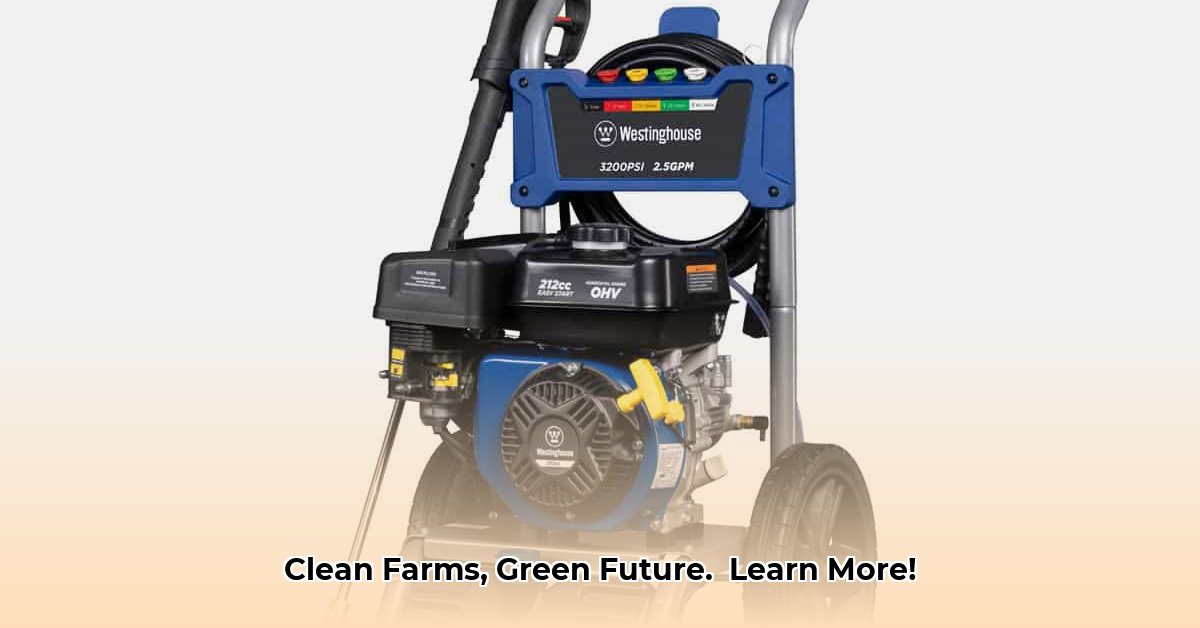
Pressure Washers at Tractor Supply: Your Guide to Clean and Sustainable Farming
Farming demands efficiency and sustainability. Keeping your operation clean shouldn't drain resources or compromise the environment. Tractor Supply pressure washers offer a powerful solution, making your farm cleaning both effective and environmentally conscious. This guide will help you select, use, and maintain a pressure washer for optimal results while minimizing your impact. For more on equipment maintenance, check out this helpful resource on Tractor Supply equipment.
Choosing the Right Pressure Washer at Tractor Supply: Finding Your Perfect Fit
Selecting the right pressure washer depends on your farm's size and cleaning needs. A small hobby farm might need a lightweight model for occasional cleaning, while a large-scale operation requires a more powerful machine. Consider these factors:
- Cleaning Tasks: Will you be removing stubborn caked-on mud from heavy machinery or cleaning smaller equipment and walkways? Higher PSI (pounds per square inch – a measure of water pressure) is needed for tougher jobs.
- Water Flow: GPM (gallons per minute) indicates the volume of water delivered. Higher GPM means faster cleaning but greater water consumption. Balance cleaning speed with water conservation.
- Water Source: Some models connect directly to a garden hose; others need a separate water tank. Consider your farm's water access.
- Ease of Use: Look for features like ergonomic handles and wheels for easier maneuverability.
Tractor Supply offers various models to suit different budgets and needs; compare specifications carefully before buying.
Don't overlook the importance of water conservation. Isn't efficient water management crucial for both your budget and the environment?
Sustainable Cleaning: Doing More with Less
Sustainable pressure washing involves both efficient machine selection and usage techniques. Conserving water is essential, especially in arid regions. These strategies are key:
- Precise Spraying: Use directed sprays instead of blasting water unnecessarily. The right nozzle is crucial. A wide fan-tip nozzle is ideal for large surfaces, while a pencil jet nozzle is best for stubborn spots.
- Biodegradable Cleaners: Choose environmentally friendly cleaning products to avoid soil and water contamination. Harsh chemicals can negatively impact the soil and water table, right?
- Regular Maintenance: A well-maintained pressure washer is more efficient and lasts longer, reducing both water use and long-term costs. Regular maintenance is essential for optimal efficiency and longevity.
A Step-by-Step Guide to Sustainable Pressure Washing
- Assess Your Needs: Identify all cleaning tasks, determining the necessary pressure washer power and features.
- Choose Wisely: Select a Tractor Supply pressure washer balancing power, water efficiency, and user-friendliness. Consider features like automatic shutoff and variable pressure settings to reduce waste.
- Optimize Your Technique: Use the lowest effective pressure setting. Direct the spray precisely, avoiding unnecessary water use.
- Maintain Your Equipment: Regularly check for leaks and perform routine maintenance. Proper storage extends your pressure washer's lifespan.
- Implement Water Conservation Strategies: Consider collecting wastewater for reuse in irrigation (where appropriate).
Managing the Risks: A Practical Approach
Pressure washing presents potential risks, but proactive measures can mitigate them:
| Risk Factor | Likelihood (1-5) | Impact (1-5) | Mitigation Strategy |
|---|---|---|---|
| Water overuse | 4 | 5 | Use a water-efficient pressure washer; implement water recycling; use low-pressure settings. |
| Chemical contamination | 3 | 5 | Use biodegradable detergents; proper wastewater disposal; avoid harsh chemicals. |
| Equipment malfunction | 2 | 3 | Regular maintenance; choose a high-quality pressure washer; follow manufacturer's instructions. |
| Regulatory non-compliance | 1 | 3 | Familiarize yourself with local environmental regulations; ensure proper wastewater disposal. |
Responsible pressure washing involves careful planning and execution, leading to efficient, sustainable farm maintenance. Staying informed about advancements in pressure washing technology can further enhance efficiency and sustainability.
How to Reduce Water Usage with High-Pressure Cleaners in Sustainable Farming
Key Takeaways:
- High-pressure cleaning (HPC) can save time and labor, potentially reducing overall water consumption compared to manual methods.
- Proper equipment selection and cleaning practices are vital for minimizing water waste.
- Water recycling systems can drastically reduce water usage.
- Biodegradable detergents protect the environment and crops.
- Understanding the environmental impact is crucial for reducing your farm's footprint.
HPC, when used efficiently, is a valuable tool. The key lies in using it precisely, like a surgeon's scalpel rather than a blunt instrument.
Choosing the Right High-Pressure Washer
Invest in an energy-efficient machine with adjustable pressure settings. Lower pressure often suffices for many tasks. Consider your farm's size and explore water recycling capabilities.
Smart Cleaning Techniques
- Plan: Avoid unnecessary cleaning. Focus on problem areas.
- Use the Right Nozzle: Select the appropriate pressure and spray pattern.
- Clean Strategically: Work top-to-bottom to minimize re-cleaning.
- Maintain Equipment: Check regularly for leaks and ensure proper nozzle alignment.
- Monitor Water Usage: Track consumption to identify improvement areas.
Water Recycling Systems
Consider investing in water recycling systems to recapture and filter wastewater for reuse, significantly reducing your water footprint.
Biodegradable Detergents
Using biodegradable detergents minimizes environmental impact.
Addressing Potential Risks
| Risk Factor | Mitigation Strategy |
|---|---|
| Excessive Water Use | Efficient nozzle selection, targeted cleaning, water recycling |
| High Energy Consumption | Energy-efficient machine, optimal pressure settings |
| Detergent Pollution | Biodegradable detergents, responsible disposal |
| Wastewater Contamination | Proper waste water collection and treatment |
Sustainable pressure washing practices contribute to a healthier environment and a more profitable farm.